 Loading
By Dr. Shaili Mody
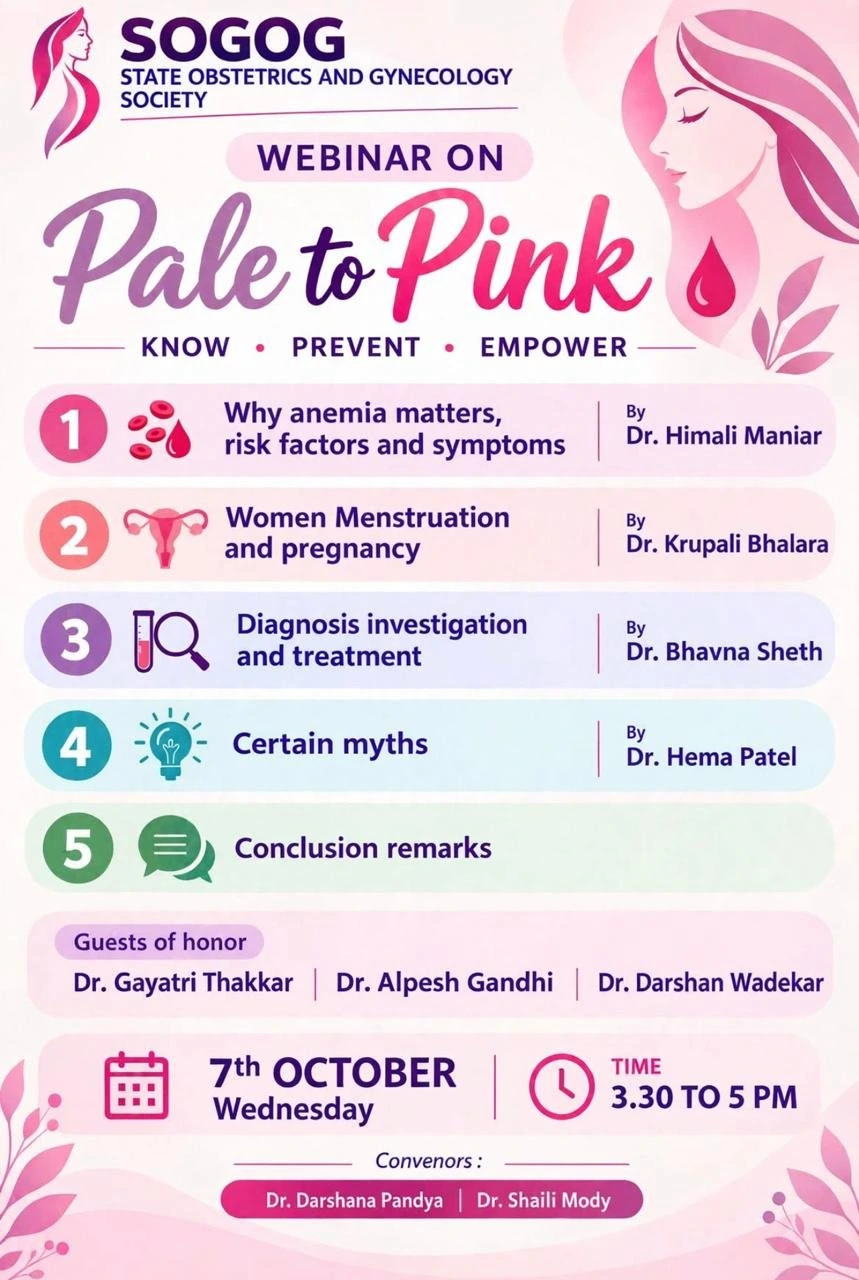
Feeling tired all the time is something many women simply accept. They put it down to a busy home, a long workday, or just getting older. But sometimes the real reason is much simpler, and much more treatable: anemia. To bring more attention to this common problem, the State Obstetrics and Gynecology Society (SOGOG) organised a webinar called Pale to Pink on Wednesday, 7th October, from 3:30 to 5 PM.
Pale to Pink is a simple idea in three words: Know, Prevent, Empower. Know the signs of anemia. Prevent it before it affects daily life. And empower every woman to take charge of her own health. The session brought several experienced gynaecologists onto one platform, each speaking on a different part of the topic, so listeners could get a full picture in just ninety minutes. Dr. Darshana Pandya and Dr. Shaili Mody were the convenors.
Anemia means the blood does not have enough healthy red blood cells or haemoglobin to carry oxygen around the body. When the oxygen supply drops, the whole body feels it. Common signs include constant tiredness, pale skin, dizziness, headaches, shortness of breath, a fast heartbeat, and trouble concentrating. Many women ignore these signs for years because they come on slowly.
The first talk, by Dr. Himali Maniar, looked at why anemia matters, who is at risk, and which symptoms should never be brushed aside. Women lose blood every month, need more iron during pregnancy, and often eat last at home, so the risk is higher than most people think.
In the second session, Dr. Krupali Bhalara spoke about how periods and pregnancy connect with anemia. Heavy or long periods can slowly drain the body's iron stores. During pregnancy, the body needs even more iron to support the growing baby. Anemia at this stage can leave a mother weak and make pregnancy care harder. That is why regular check-ups, a good diet, and timely advice from a doctor matter so much, both before and during pregnancy.
Dr. Bhavna Sheth explained how anemia is diagnosed and treated. The good news is that it is usually easy to find. A simple blood test shows haemoglobin levels, and further tests can help find the cause. Treatment depends on that cause. For many women, iron-rich food and iron tablets prescribed by a doctor are enough. In some cases, other treatment may be needed. The key point is to find out why the haemoglobin is low, not just to correct the number. Please do not start or stop any medicine on your own.
Dr. Hema Patel took up certain myths that are very common in our homes. Some people believe anemia is just normal weakness in women. Others think iron tablets are always harmful, or that only pregnant women need to worry. Ideas like these stop women from getting help on time. Clear facts, shared in simple words, can change that. When a doctor answers these doubts openly, women feel safe to ask more questions.
The webinar was graced by guests of honour Dr. Gayatri Thakkar, Dr. Alpesh Gandhi, and Dr. Darshan Wadekar, and closed with concluding remarks. Their presence shows how seriously the medical community takes women's health awareness.
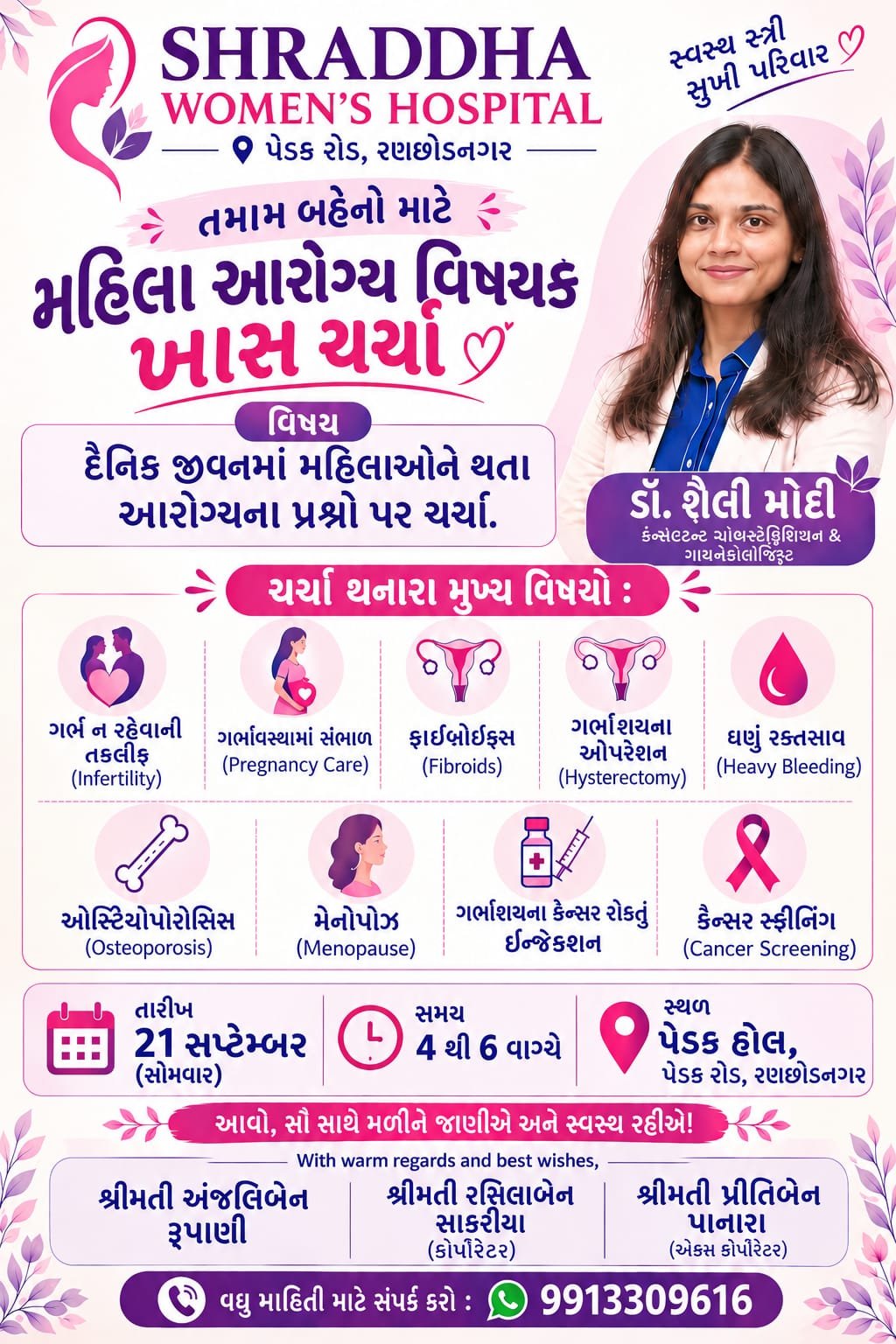
At Shraddha Women's Hospital, Pedak Road, Ranchhodnagar, our focus is caring for women at every stage of life, from adolescence and pregnancy to menopause. Our motto is Healthy Woman, Happy Family. To learn more about our services and how to reach us, please visit our website: Shraddha Women's Hospital
Pale to Pink is more than a title. It is a promise that no woman should have to live tired and unnoticed. If you often feel weak, dizzy, or low on energy, do not wait. A simple test and a short talk with your doctor can bring the colour and energy back.
About the author: Dr Shaili Mody is a Consultant Obstetrician and Gynaecologist at Shraddha Women's Hospital, Pedak Road, Ranchhodnagar, and a convenor of this webinar. For appointments or questions, call or WhatsApp 9913309616.
Disclaimer: This article is for general awareness only and is not a substitute for professional medical advice. Please consult a qualified doctor about anaemia or any health concern.